
Book Recommendations

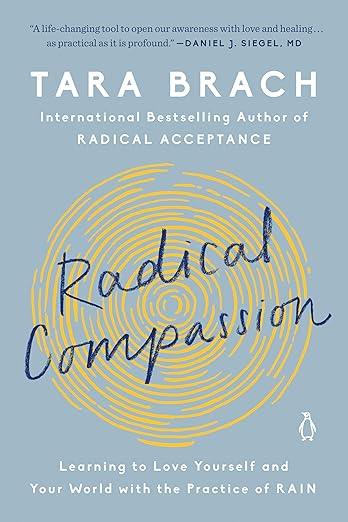
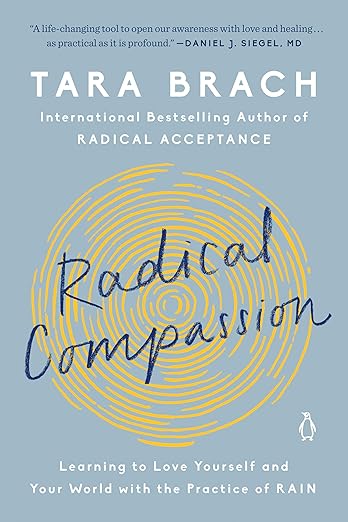
Radical Compassion:
Learning to Love Yourself and Your World with the Practice of RAIN
Tara Brach
Tara Brach shares her knowledge and very profound insights with a beautiful vulnerability. At the beginning of the book, she says the following:
“Yet this very suffering—feeling deficient and disconnected – has also been my most fertile ground for waking up. It has led me to a spiritual path and practices that I cherish. And when I get stuck in painful emotions, it brings me to a repeating realization, an insight that has profoundly changed my life: I have to love myself into healing. The only path that can carry me home is the path of self-compassion."
About the author:
Tara Brach, PhD, is an internationally known teacher of mindfulness, meditation, emotional healing and spiritual awakening. She is the senior teacher and founder of Insight Meditation Center of Washington, DC. She is the author of other remarkable books like The Radical Acceptance. And her podcasts and her weekly talks are available weekly for any curious mind and heart.
Tara Brach not only serves as a mentor and amazing teacher but she is one of
my most beloved meditation guides. Anyone can find refuge in her talks on a variety of topics that might be of concern or wonder at any one moment in time.
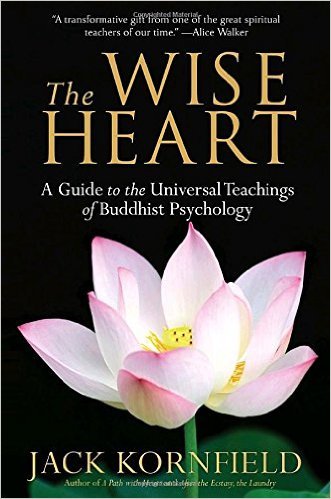
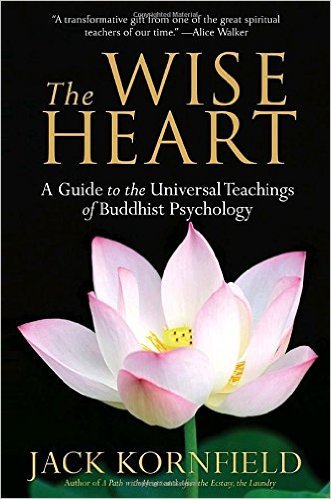
The Wise Heart:
A Guide to the Universal Teachings of Buddhist Psychology
Jack Kornfield
A guide to the transformative power of Buddhist psychology—for meditators and mental health professionals, Buddhists and non-Buddhists alike.
“You have within you unlimited capacities for extraordinary love, for joy, for communion with life, and for unshakable freedom—and here is how to awaken them."
About the Author
Jack Kornfield is a Buddhist teacher and meditation master on internationally renown and a cofounder of the Insight Meditation Society and of Spirit Rock Center in northern California. A former Buddhist monk, he holds a PhD in clinical psychology. He is also the beloved teacher and founder of the MMTCP program together with Tara Brach. He is the author of many books and his voice is one-of-a-kind, always bearing always tones of gentleness and giving you the impression he is smiling directly at you.
An insight into the river of emotions: “Buddhist psychology helps us distinguish two critical aspects of feeling. The first and most essential quality is called the primary feeling. According to this perspective, every moment of
experience is infused with a feeling tone. Like valence in chemistry, each sight, sound, taste, touch, smell or thought will have either a pleasant, painful or neutral quality” The stream of primary feelings is always with us, but we often have the mistaken notion that life is not supposed to be this way. We secretly believe that if we act just right ,then our stream of feelings will always be pleasant and there will be no pain, no loss.
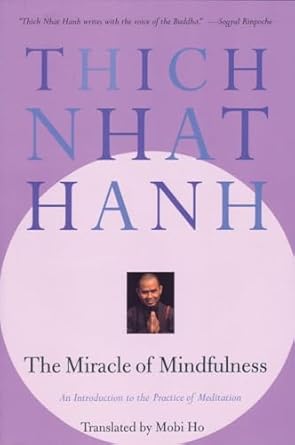
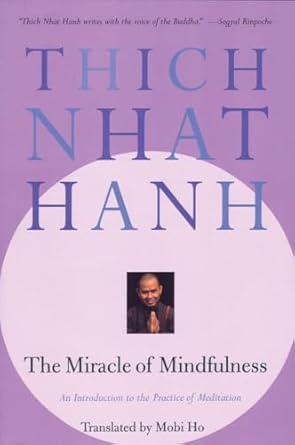
The Miracle of Mindfulness:
An Introduction to the Practice of Meditation
Thich Nhat Hanh
About the author
Thich Nhat Hanh (1926–2022) was a Vietnamese Buddhist Zen Master, poet, and peace activist and one of the most revered and influential spiritual teachers in the world. Born in 1926, he became a Zen Buddhist monk at the age of sixteen. His work for peace and reconciliation during the war in Vietnam moved Dr. Martin Luther King Jr. to nominate him for the Nobel Peace Prize in 1967. In 1982 he established Plum Village France, the largest Buddhist monastery in Europe and the hub of the international Plum Village Community of Engaged Buddhism. Over seven decades of teaching, he published a hundred books, which have been translated into more than forty languages and have sold millions of copies worldwide.
Here is one of my favourite and simple exercise to anchor ourselves in the present moment:
“Washing the dishes to wash the dishes” – which means that while she/he is doing that one should be completely aware of the fact that one is washing the dishes.
The translator of the book, Mobi Ho goes on and comments in the preface of the book — “At first, it sounds even silly- why putting so much emphasis on a thing that simple. But this is exactly the point, the fact that I am standing there at the sink and washing the bowls it is a wondrous reality. I am being completely myself, following my breath, conscious of my presence, and conscious of my thoughts and actions. “
Most of us are already thinking of the cup of tea that we will drink afterwards and thus we will hurry to finish the dishes.
“In fact, we are completely incapable in realizing the miracle of life happening while standing at the sink. If we cannot wash the dishes and be present, we cannot drink the tea either, we will only be thinking of other things, barely aware of the cup in our hands. Thus we are sucked up in the future – and we are incapable of actually living one minute of life”.
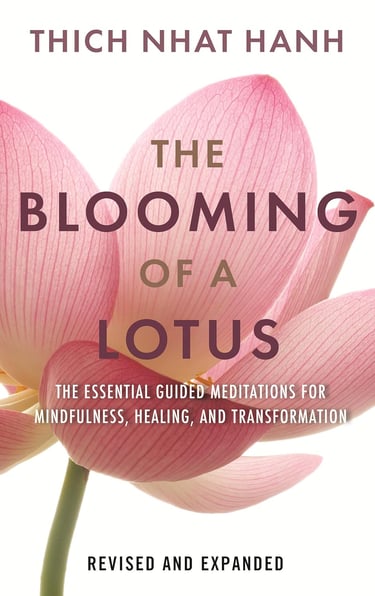
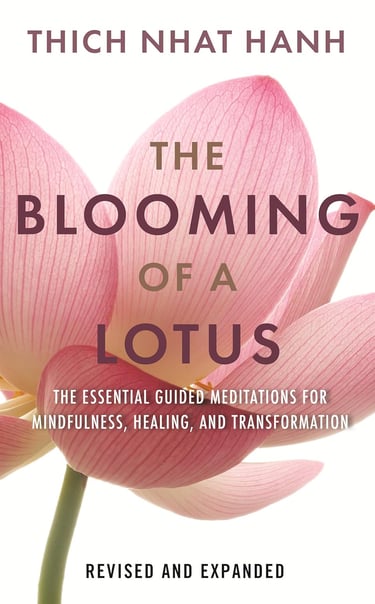
The Blooming of a Lotus: Essential Guided Meditations for Mindfulness, Healing, and Transformation
Thich Nhat Hanh
Guided meditations for Achieving the Miracle of Mindfulness
About the author : Thich Nhat Hanh is a Vietnamese monk, renowned Zen master, poet and peace activist. He was nominated for the Nobel Peace Prize by Martin Luther King Jr.. in 1967 and is the author of many books. He lived his last years in Plum Village in France a community set up following the Forrest Tradition in Vietnam and second branch to Plum Village in Vietnam.
One of the world's greatest meditation teachers offered thirty-four guided exercises that bring both beginning and experienced practitioners into closer touch with their bodies, their inner selves, their families, and the world. Compassionate and wise, Thich Nhat Hanh's healing words help us acknowledge and dissolve anger and separation by illuminating the way toward the miracle of mindfulness.
Who is Thay (as the students call him): Thich Nhat Hanh stands the test of time with his life story, his legacy and his strong belief in the goodness of people, his belief in non-violence, and always promoting compassion and self-compassion. His lessons in mindfulness and meditation reveal themselves in us through a steady rhythm. The repetitions, the poems, the simplicity of life transform our mind, translate the mundane symbols of everyday, of nature and emotions and by enhancing their connection to the present moment – they always serve as grounding material to me. I would always have this book with me when travelling as a safety net to reach out for comfort and awareness practice.
“When we meditate we use our stored consciousness (the deepest levels of our consciousness) more than our mind consciousness (our thinking and rationalization).
That is why images are more useful to the meditator than the abstract concepts. These exercises are to help us be aware and nourished by the involvement of all five senses with sensory impressions. They help us appreciate more the wonders of life that our senses make possible. They also help us be aware of any feelings — pleasant, unpleasant or neutral — that arise when our senses perceive sensed objects.
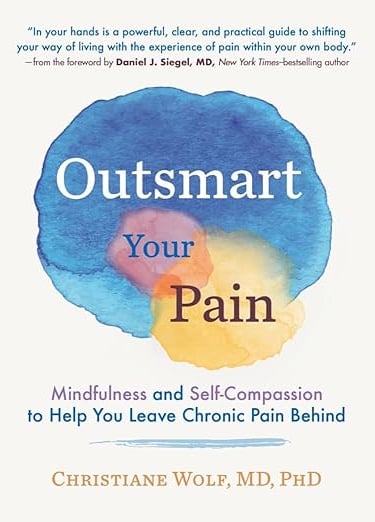
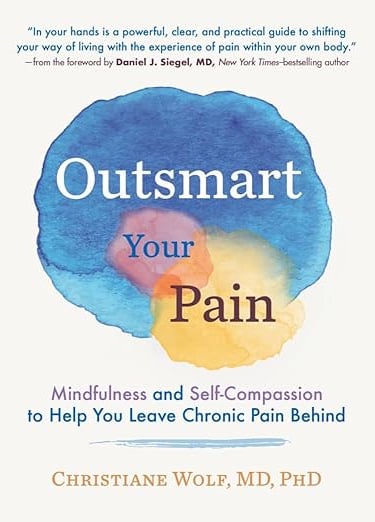
Outsmart Your Pain: Mindfulness and Self-Compassion to Help You Leave Chronic Pain Behind
Christiane Wolf
Pain can be a big, unwieldy box that we struggle to carry all day. But what if we could put down this box, unpack it, and tackle the contents one by one? Outsmart Your Pain is Dr. Christiane Wolf’s radically clear, evidence-based guide to relieving chronic pain with mindfulness, complete with twenty easy guided meditations and self-compassion practices, including:
rewriting the “pain story” you tell yourself
practicing loving acceptance of your body as it is
mindfully working through negative emotions
strengthening your inner and outer support systems.
By separating your pain from the stressful thoughts and troubled feelings that come with it, you can lay down your burden and live with joy.
About the Author
Christiane Wolf, MD, PhD, is a physician turned mindfulness and compassion teacher and a senior teacher at InsightLA in Los Angeles, California. She trains teachers and teaches Mindfulness-Based Stress Reduction (MBSR) and Mindful Self-Compassion to groups and individuals in the US and across Europe. With her medical background, one of her specialties is working with people who suffer from chronic illness and pain. Dr. Wolf is a lead teacher and program developer for the nationwide mindfulness facilitator training for the US veterans Administration. Dr. Wolf is also a Buddhist teacher in the vipassana (Insight) meditation tradition and has received teacher transmission from Trudy Goodman and Jack Kornfield. She is coauthor, with Greg Serpa, of A Clinician's Guide to Teaching Mindfulness.
Who is Christiane for me:
a wonderful teacher whose books have served as a constant guide. I had the pleasure to also attend a silent Vipassana (insight) retreat in Spain in 2024, which was led by Christiane together with yoga and pranayama breathing teacher Viveka Nguyen of Atmajoti Yoga in Sweden. And I’m looking forward to attending similar events in the future.
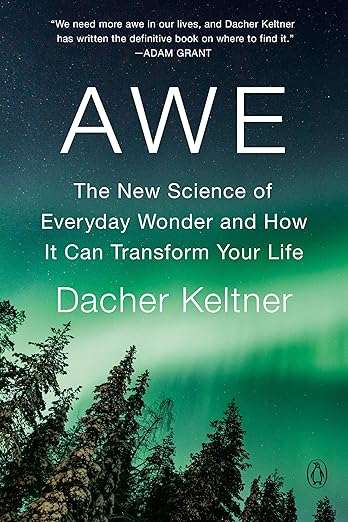
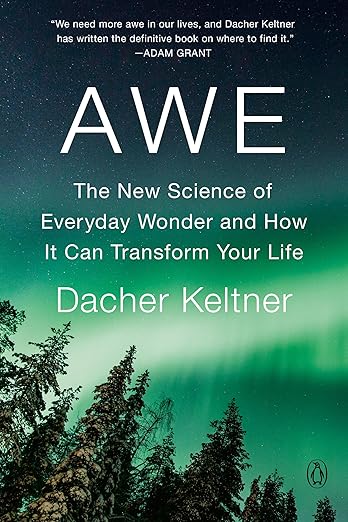
Awe:
The New Science of Everyday Wonder and How It Can Transform Your Life
Dacher Keltner
About the author: Dacher Keltner is a professor of psychology at the University of California, Berkeley, and the faculty director of UC Berkeley’s Greater Good Science Center. A renowned expert in the science of human emotion, Dr. Keltner studies compassion and awe, how we express emotion, and how emotions guide our moral identities and search for meaning. His research interests also span issues of power, status, inequality, and social class. He is the author of The Power Paradox, the bestselling books Born to Be Good and Awe, and the coeditor of The Compassionate Instinct.
What this book represents to me:
This book stands as a testament to the practices long engaged in my own self-becoming and self-sustaining. This is a way of living that was never labeled before as a practice, a tool kit, or coping mechanisms. This book simply opened up my understanding that “awe” is more than accessible, and can reach out from within to its energy. It is fascinating to become aware of all the scientific studies that explore and showcase the power of awe.
“I have taught happiness to hundreds of thousands of people around the world. It is not obvious why I ended up doing this work: I have been a pretty wound-up, anxious person for significant chunks of my life and was thrown out of my first meditation class(for laughing while we chanted “I am a being of purple fire”). Life can surprise us, though, in giving us the work we are here to do. So nearly every day in classrooms of different kinds, I’ve taught people about finding the good life”
How can we live the good life?One enlivened by joy and community and meaning,that brings us a sense of worth and belonging ,and strengthens the people and natural environments around us?
Now twenty years into teaching happiness,I have an answer:
FIND AWE” - Dacher Keltner
There are 4 beautifully curated sections of the book:
A Science of Awe
Stories of Transformative Awe
Cultural Archives of Awe
Living a Life of Awe
You can also read my article on Substack here:
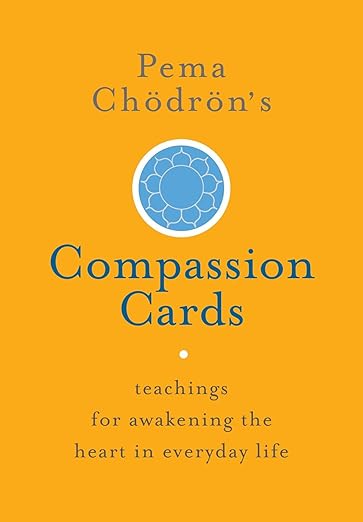
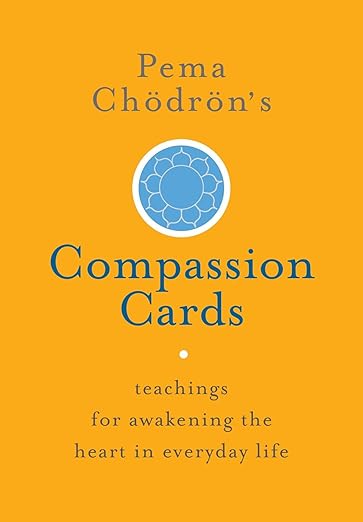
Compassion Cards:
Teachings for awakening the heart in everyday life
Pema Chödrön
Fifty-nine beautifully designed cards on the classic Buddhist practice of lojong for everyday inspiration and contemplation--with instructive commentaries by Pema Chödrön to make the teachings more accessible and applicable to contemporary life.
About the author: Pema Chödrön is an American-born Tibetan Buddhist. She is an ordained nun, former acharya of Shambhala Buddhism and disciple of Chögyam Trungpa Rinpoche. Chödrön has authored several dozen books and audiobooks, and was the principal teacher at Gampo Abbey in Nova Scotia until recently.
Who is Pema Chödrön is to me:
I came across her story and her book “When things fall apart” more than a decade ago at a cross roads in my life. I understood then, and pretty rapidly, that I was not equipped for heartbreak, for losing too many of my aspirations and from what I thought I knew about myself. I had to wake up very quickly to a new reality and the only way I knew how to do it was by reading and discovering meaningful teachers in authors. Her book's title made complete sense to me at that time, as I couldn't recall anything significant. It felt as if the world was crumbling apart and I had lost first and foremost what I knew as my own identity. I am eternally grateful for discovering Pema Chödrön. I keep going back to her courses and teachings, and follow updates about her on the Pema Chödrön Foundation page.
Lojong, or mind training, is a core practice in all the lineages of Tibetan tradition. It can perhaps best be characterized as a method for transforming our mind by turning away from self-centeredness and cultivating instead the mental habits that generate bodhicitta, the awakened mind that puts the benefit of others above all else. The teachings on it are more diverse than many people realize, so we thought we would lay out a map of its origins and development for our readers, with some recommendations along the way for books through which the practice can be explored. (credits to Shambala publications).
“The positive seed that is within you, experienced as a yearning to practice and wake up” - one of the five strengths taught by Pema Chödrön in “The Condensed Heart Instructions.”
Practice the five strengths:
Strong determination to train in opening the heart and mind:
familiarization with the practices (such as tonglen) that help you do that: - note – explain what Tonglen is in Guideline about meditation forms and traditions where it is practiced.
the positive seed that is within you, experiences as a yearning to practice and wake up
reproach, which is a tricky one for Western students but is an important practice: realizing that ego-clinging causes you to suffer, you delight in self reflection, honesty, and in seeing where you get stuck; and
the aspiration to help alleviate suffering in this world, expressing that intention to yourself.
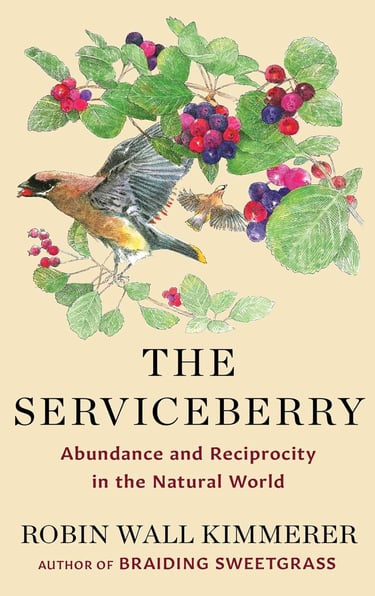
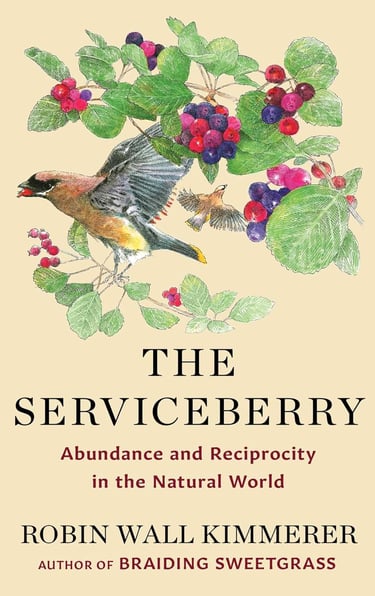
The Serviceberry:
Abundance and Reciprocity in the Natural World
Robin Wall Kimmerer
We learn that in the Anishinaabe worldview, all the sustenance that the land provides, from fish to firewood ,everything that makes our lives possible,” is provided by the lives of more-than-human beings.
“When we speak of these not as things or natural resources or commodities, but as gifts, our whole relationship to the natural world change. “
A very simple example to keep forever in our mind would be: should you receive a basket of berries from your neighbour, you would probably make a pie with them, or in our country, we would make berry preserves and most probably we would share with the same neighbours or others. It would not be only for ourselves. There is a sense of responsibility, a reverence, an appreciation and we would feel compelled to also give something back. Perhaps on another day, we would knock on the neighbour’s door and share produce from our garden. I was lucky enough to have grown up in such a community based on sharing. Food, produce, prepared meals, bread, polenta and cheese. I can still remember those days when we were bouncing back and forth from our place to the neighbour’s, or at my grandmother’s, where someone would bring a plate of milk porridge, or pears or some cuts of meat… there was a continuous giving and receiving and doing something with it, and sharing it again. Pay it forward, pay it back in the most natural way, following the seasons — just like Robin so eloquently describes.
You can also read my article on Substack here:
https://open.substack.com/pub/maggiehongkong/p/a-basket-of-berries?r=5nraa&utm_campaign=post&utm_medium=web&showWelcomeOnShare=false (Dec.22,2024)
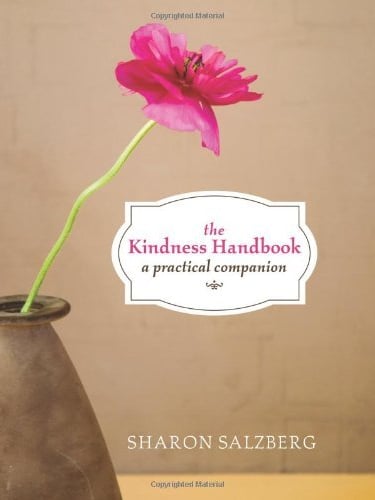
The Kindness Handbook:
A Practical Companion
Sharon Salzberg
Sharon Salzberg represents one of the most recognized voices in this arena and she has written extensively on this topic. You can find her podcast and her books on all platforms and I would recommend her teachings at anytime. Such an inspiration and such a great interpreter distilling knowledge and also life experience into accessible terms and sharings for everyone.
“Metta Meditation is part of the living tradition of meditation practices that cultivate spaciousness of mind and openness of heart”
Last month meditations were just preparing ourselves for this. Really.
I would leave you here with one sentence to take it from her book:
“May the power of loving-kindness sustain me”.
If we can repeat this every day. The space that you can create and hold internally will expand effortless. Try if for twenty one days. Morning and Evening. And any moment that you need a pat on your shoulder. You would feel it deeply in your heart and in your body and its embrace will increase slowly.
It works only if you commit to it. Say it internally and say it out loud. The power of your own voice will stun you in remarkable ways.
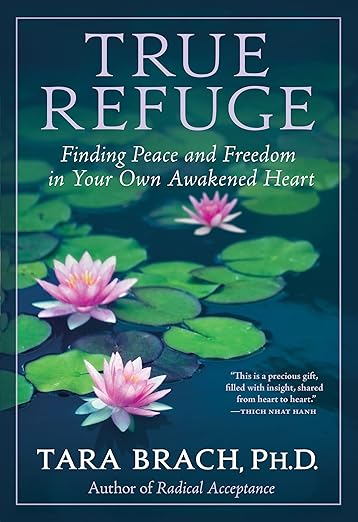
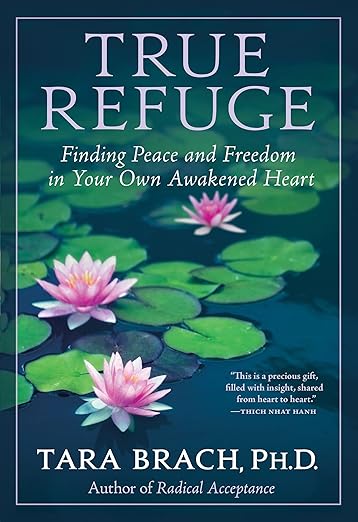
True Refuge: Finding Peace and Freedom in Your Own Awakened Heart
Tara Brach
Tara Brach reaches our deepest corners of our hearts with this insightful gem of a book called “True Refuge”.
Tara offers as always in her teachings relatable examples, life experiences, taking us on a journey of self-discovery. We can relate to all life stories shared here, no matter the protagonist.
I loved the clarity shed on the concept of false refuge versus the concept of true refuge.
For me, true refuge is not always a destination. It is the path itself of awareness, looking deeper and facing my own shadows and projections, being responsible and yet self-compassionate, and ultimately becoming diligent and taking mindful action.
Becoming diligent in my approach towards being authentic and kind does involve shedding old habits, does involve identifying the false refuge (where my energy does gets depleted).
I loved the emphasis on mindfulness of the body, connecting us with the sensations of our own body as a first gateway towards a true refuge. There is a “truth in our body” that we tend to be disconnected from and we could teach ourselves to bring back to life.
I loved one of her analogy:the image of a great tree uprooted from the earth.
“Roots in the air we loose access to the aliveness and love and beauty that nourishes our deepest being. No false refuge can compensate that loss”.
We are transported with every chapter by modalities to assess and discern between false and true and also how we can all come back to the path of a true refuge.
“No matter how challenging a situation, there is always a way to take refuge in a healing and liberating presence.”
And if you can add one more quote - one more page:- Quote available
"Often it is not until we are jolted by crisis—a betrayal of the heart, the death of a loved one, our own impending death—that we see clearly: Our false refuges don’t work. They can’t save us from what we most fear, the pain of loss and separation. A crisis has the power to shatter our illusions, to reveal that in this impermanent world, there really is no ground to stand on, nothing we can hold on to. At these times, when our lives seem to be falling apart, the call for help can become fully conscious. This call is the heart’s longing for a refuge that is vast enough to embrace our most profound experience of suffering.”
Tara Brach- True Refuge
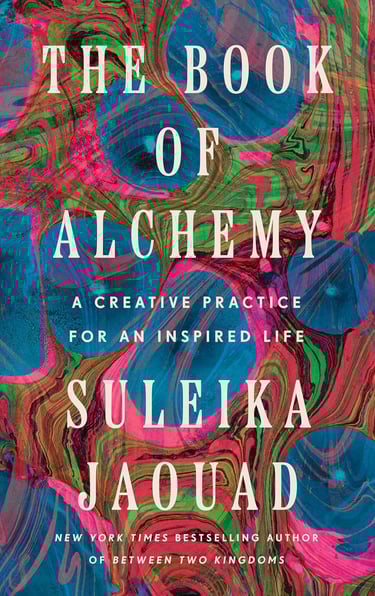
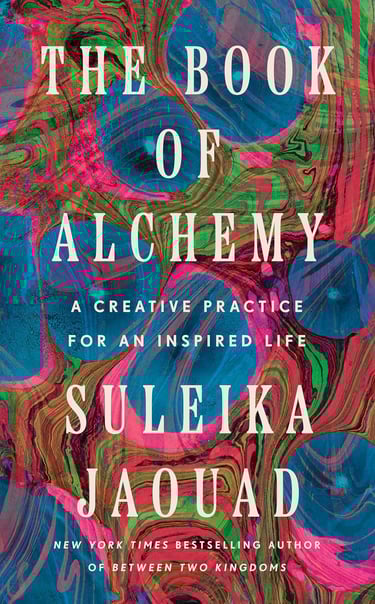
The Book Of Alchemy: A Creative Practive For An Inspired Life
Suleika Jaouad
Since we have started with some insightful prompts for opening up our heart with raw honesty and reverence to the fact that we are all one, and we can see our own reflections into everyone else, I would like to close the One Kind Voice newsletter with one of my beloved and most cherished authors, Suleika Jaouad and her latest book, The Book of Alchemy, A creative practice for an inspired life.
I felt deeply connected with Suleika’s journey from her first book “Between Two Kingdoms” and I am a devoted follower of her life journey, her written work, her substack platform, her beautiful love story with Jon Batiste whose genius, creativity, kindness and faith I absolutely adore too. They are a couple who inspire me everyday to never give up in true love. True love exists.
This is one of the books I tend to keep buying as a “gift stock”, handy at home, for birthdays, friends visiting, a coffee encounter. I have a pile of “book gifts” and before I leave my home, I usually think “she/ or he might love this book too”. It is not always the case, but it is happening in my world. Apologies if it might not fit everyone’s interests. Maybe one day :)
The Book of Alchemy - takes the art of journaling at a immersive level , bold beautiful and artistic at the same time. She starts with a challenge of 108 days of journaling, she introduces us to prompts and inspiration from so many voices, artists, writers, musicians, mentors… the list is long. You can open the book at any page and just get inspired by a mini chapter and a prompt. Suleika’s book has created a movement leading not only to workshops around it, home gatherings, events, both in US and Tunisia, her home country, for example, and also to an online movement with people joining from all around the world and sharing their experiences with Suleika.
Suleika lives this life, through chemotherapy sessions and a long term illness that she battles with creativity, with art, with her love for family, partner, pets, collaborators, and her followers on Substack. She shows us every day that she shows up and chooses to beautify the world, in spite of the tremendous challenges that might come her way.
Dear Suleika, with every post, with every raw and candid share of your journey- you teach me one very very good thing: that we can all do it. We can all beautify. We can all create. We can also take time and break down, or collapse. We can just be. We can show up. Thank you from the bottom of my heart.
I will keep gifting your wonderful book to the world. As a matter of fact, I have just added a new dream to “Motivation into Action” moodboard that I call “Reach out to a dream each day” - I have started dreaming to visit New York and meet you in person, attending one of the very workshops of gatherings related to The Book of Alchemy”.
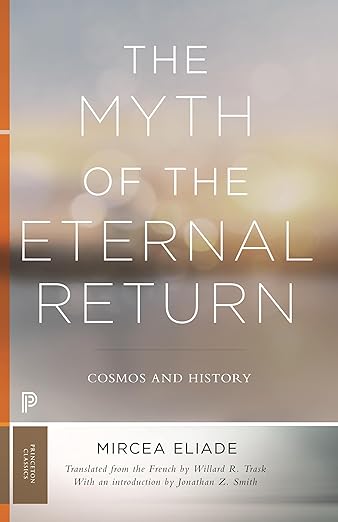
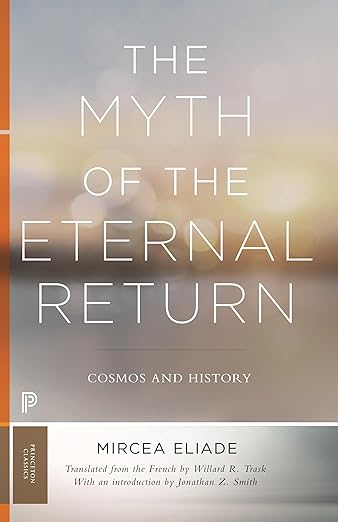
The Myth of the Eternal Return: Cosmos and History (Mythos: The Princeton/Bollingen Series in World Mythology)
Mircea Eliade
Anytime I connect with the work of Mircea Eliade, I feel first and foremost very proud as being Romanian. I have met his work as a kid, through his novels at first, and being such a prolific author, I have kept connecting along the years to his philosophical and academic work.Most probably, I can only now start to understand better his richness of academic research, as the topics he explores are very wide and would require some initial knowledge to some extent of history philosophy, religious studies.
This book is no less task. And Mircea Eliade himself keeps repeating and explaing the reader at every occasion that he could focus on one example at a time, or he can bring the attention of a particular aspect only as the comparison he has attempted to summarise here it is just vast.
He has grouped the research into four chapters called “ Achetypes and Repetition” ,”The Regeneration of Time”, “Misfortune and History”, “ Terror of History”.
The great introduction by Jonathan Z. Smith talks at large of the massive work that Mircea Eliade undertook, together with others, from 1960 till 1980’s to understand religion and add brick by brick foundations to the comparative studies of “History of Religions”.
I would like to share here with you as well, cultivated readers , a term Mircea Eliade uses himself, a take from his own foreword to the book that speaks volumes:
“The present essay [….] examines the fundamental concepts of archaic societies- societies which, although they are conscious of a certain form of “history”, make every effort to disregard it .In studying these traditional societies, one characteristic has especially struck us: it is their revolt against concrete, historical time, their nostalgia for a periodical return to the mythical time of the beginning of things, to the Great Time. […..] our concern has been to draw the attention of the philosopher ,and of the cultivated man in general, to certain spiritual positions that, although they have been transcended in various regions of the globe, are instructive for our knowledge of man and for man’s history itself. “
Further more from his preface:
“The essential theme of my investigation bears on the image of himself formed by the man of the archaic societies and on the place that he assumes in the Cosmos. The chief difference between the man of the archaic and traditional societies and the man of the modern societies [….} lies in the fact that the former feels himself indissolubly connected with the Cosmos and the cosmic rhythms, whereas the latter insists that he is connected only with History.”
Each chapter made me understand how are we connected in our evolution, and opened a massive tab of curiosity. There was something dormant deep down in myself that I wanted to discover so much about civilizations and our evolution as species and I feel that I found the mentor I have been looking for. His insights make me resonate with particular cultures and make me now, more than ever, ready to explore further the way those ahead of us explored the world, the cosmos. The geometry of the sacred constructions, the big question of Time, calendars, the lunar calendars, the transmissions of wisdom ,these are only a few that Mircea Eliade attempted to explore here.
Thank you Mircea Eliade for guiding us.
You can find here also the book synopsis on Amazon:
First published in English in 1954, this founding work of the history of religions secured the North American reputation of the Romanian émigré-scholar Mircea Eliade. Making reference to an astonishing number of cultures and drawing on scholarship published in no fewer than half a dozen European languages, The Myth of the Eternal Returnilluminates the religious beliefs and rituals of a wide variety of archaic religious cultures. While acknowledging that a return to their practices is impossible, Eliade passionately insists on the value of understanding their views to enrich the contemporary imagination of what it is to be human. This book includes an introduction from Jonathan Z. Smith that provides essential context and encourages readers to engage in an informed way with this classic text.
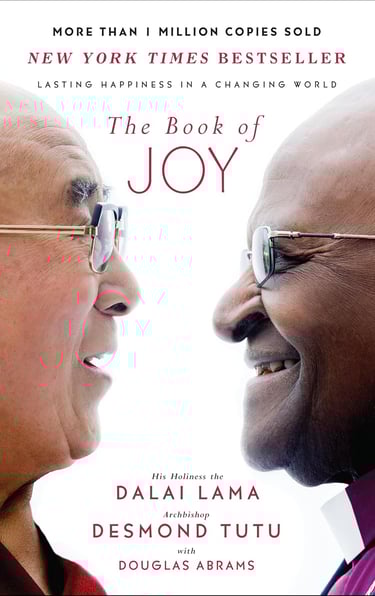
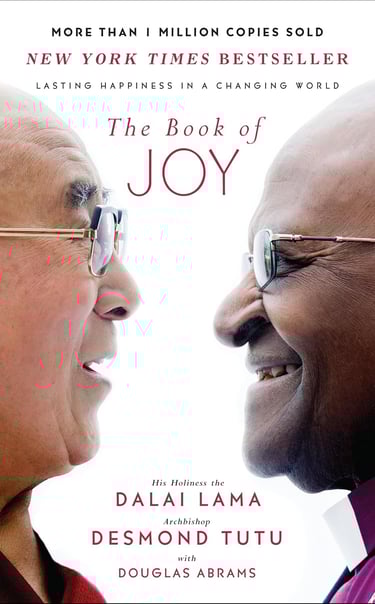
The Book of Joy: Lasting Happiness in a Changing World
I would like to conclude with a quote on loneliness from The Book of Joy - His Holiness Dalai Lama, Archbishop Desmond Tutu and Douglas Abrams.
"The only thing that will bring happiness is affection and warm heartedness.This really brings inner strength, and self-confidence,reduces fear, develops trust, and trust brings friendship. We are social animals,and cooperation is necessary for our survival , but cooperation is entirely based on trust. When there is trust, people are brought together - whole nations are brought together. When you have a more compassionate mind and cultivate warmheartedness , the whole atmosphere around you becomes more positive and friendlier. You see friends everywhere.If you feel fear and distrust, then other people will distance themselves.They will be also cautious,suspicious and distrustful.Then comes the feeling of loneliness. When someone is warmhearted, they are always completely relaxed."
May we appreciate the ones in front of us just like us.
May we accept and offer no judgement.
May we listen deeply and encourage people to express themselves.
May we cultivate warmheartedness with every connection.
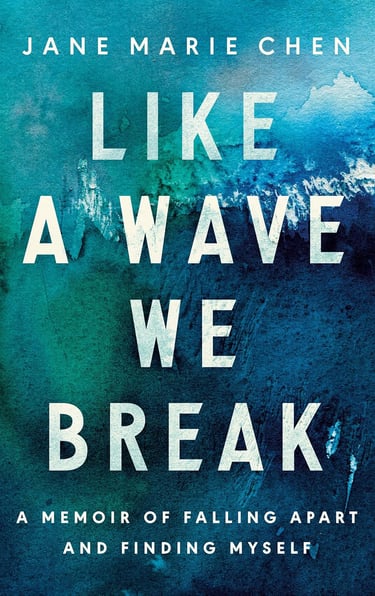
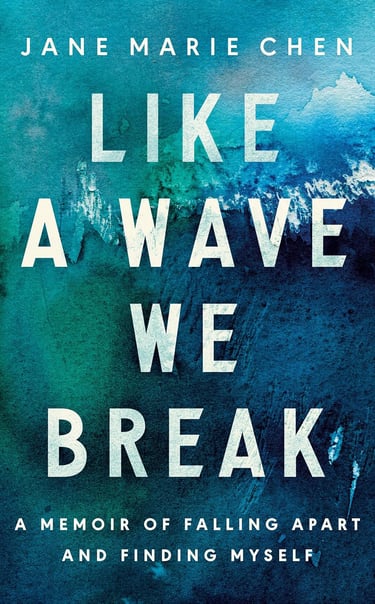
Like a Wave We Break: A Memoir of Falling Apart and Finding Myself
Jane Marie Chen
I would like to share with you one of my most recent Audible titles - “Like a Wave We Break" - by Jane Marie Chen - a memoir of falling apart and finding myself Narrated by the author. It is described as a courageous memoir of one woman’s journey of unravelling and awakening, breaking free of the narratives that once defined her and confronting the long-buried truths of a traumatic past- by the former CEO and co-founder of Embrace ( a company that developed a groundbreaking incubator helping to save hundreds of thousands of newborns in the world’s most vulnerable communities.
This is a riveting story of success, failure, understanding the waves that make and break us, a relentless search for “becoming better”, for “healing”, and culminating in making peace with her past and embracing her whole family as it is, while embracing bravery to accept herself too. The title also refers to her newfound lifelong passion - surfing and embracing the ocean wholeheartedly too.
One thing I would love to add- I am so grateful for all women facing their own inside battles and pursuing all avenues to cope, to thrive, to be better, to be love, to find purpose in making peace with ourselves and with our pain.
I bow to them and their stories just add fuel to my enthusiasm to foster kindness, generosity and compassion in all my endeavours. Thank you to all the wonderful trailblazers I met myself or I read about.
This might not always be a smooth reading or listening. It is at times challenging to see how the author falls in some behaviour patterns and to understand and go through these motions with her, as we are doing exactly the same. I always find this so daunting about our experience, we do hope we learn from our falls and then here we are once again, facing similar issues. It is so much related to how deep we aspire to look inwards and see the real emotions we have kept bottled inside, unattended to for years and years or maturing.
I loved her honesty and vulnerability to talk about her relationship with her father and mother, and the memories stirred up at times, stronger and stronger, unresolved.
I loved Jane's commitment to persevere and try all healing approaches - pranayama(to the extent that she has tattooed the word on her arm), yoga ashrams in India, vipassana retreats. The Tony Robbins workshop and "The body keeps the score" approach and the lengths that she has gone to attend the workshops with Dr. Bessel van der Kolk and his wife, IFS system, Internal Family Systems approach.
I think a lot of us try to learn so much from these online courses and their books. I loved her tenacity of not leaving any stone unturned in order to heal and generate a healthy relationship of acceptance with her family. It takes a lot of courage. Thank you!

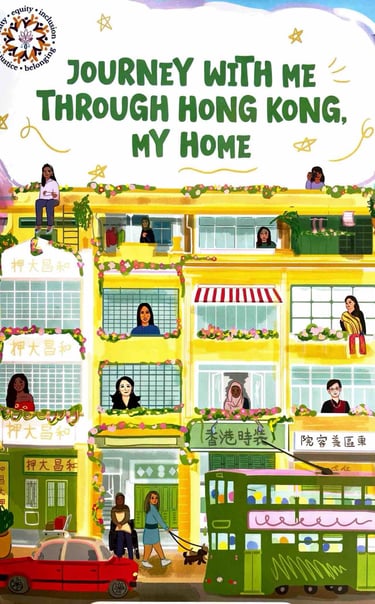
Journey With Me Through Hong Kong, My Home
Adele Li and Sophie Yan, 2023 DEIJB Summer Fellowship
I was so enthusiastic about is a booklet, called "Journey with me through Hong Kong, my home", created by a student fellow of the 2023 DEIJB Summer Fellowship organized by DEIJB LAB.
This is a book highlighting women from minority backgrounds in Hong Kong, and that manages both to be education for any age and for any reader, and allows us to be a kid again and try many of the interactive activities proposed in the workbook. I hope that more teachers,students can become aware of this wonderful initiative and the book and will be willing to share this wonderful resource. We will share the QR code of the book ordering form, and hope to share here a short video showing the inside of the book as well as the main covers.
What is DEIJB LAB about? This is quoted from the book:
"The Diversity,Equity,Inclusion,Justice and Belonging Laboratory (DEIJB Lab) was founded by Professor Puja Kapai in 2023 with preliminary funding from the Global Pluralism Award, which Professor Kapai received in recognition of her extensive work in advocating inclusion and the rights of minority communities. Puja is a multi-award researcher,academic and community justice advocate. She is an Associate Professor, Convenor of the Women's Studies Research Center and Director of the Social Justice Summer Internship programme at the Faculty of Law of the Hong Kong University(HKU).
The DEIJB Lab aims to raise awareness about the widespread and detrimental effects of voert,subtle and implicit discrimination and exclusion in schools.It highlights their harmful impacts on the broader society and collaborates with multidisciplinary stakeholders to design context-specific solutions to promote systemic change to achieve equity, inclusion, justice and belonging for every child."
The mission of DEIJB Lab is a large take on actionable points like: supporting schools to develop policies for inclusive learning environments, empowering school teachers' capacities to deliver inclusive education, developing culturally responsive curricula reflecting student diversity,co-creating inclusion toolkits to eradicate bias and strengthen both justice-learning pathways and belonging within the educational environment.
Adele Li, the creator of this book and a fellow of 2023 Summer Fellowship shares with us the following:
"As I got older,I wanted to understand why people are treated differently, because I believe that everyone deserves the chance to do great things, and be respected while doing them."[...]
"That is why I decided to focus on YOU-kids!", Adele continues. "It's important to respecto be kind and welcoming to others even if they're different from us as early as your age,and I believe we can learn together. During the fellowship programme,we talked about lots of fun ways to teach kids, like creating awesome activities and having fun discussions.I figured out that the best way to connect with kids is through art and games!Who doesn't love getting creative? Did you know that drawing shows us how we understand the world?"
I would leave you with Adele's words as they reflect all there is to know about this book and what is standing for:
"This book is designed to help you use your creativity to explore the world and meet inspiring women. And the best part? You're learning about important things like belonging, inclusion, and kindness while having fun!"
Thank you Professor Puja Kapai for setting up this important initiative in Hong Kong, and a big bow to Adele Li and Sophie Yan, the creators of the book.
You could follow up DEIJB on LinkedIn, where they share wonderful initiatives and materials.
In order to order the book - please fill in the form here. The easiest way is to order maybe more at a time, so you can share in your playgroups, at school,with other teachers and share this wonderful initiative.
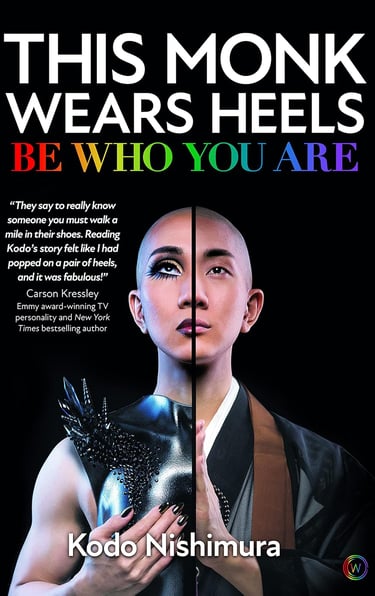
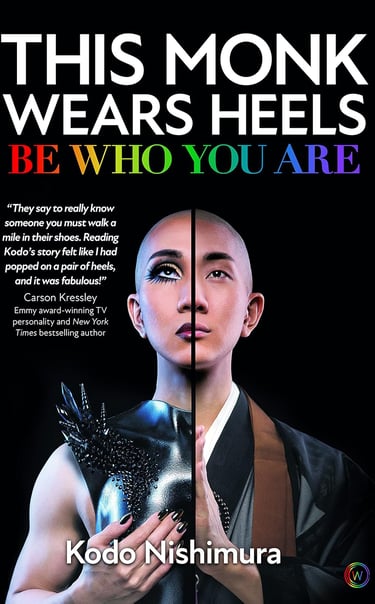
This Monk Wears Heels: Be Who You Are
Kodo Nishimura
Kodo Nishimura presented himself as “The Monk Who Wears Heels” and lives by the slogan “Be Who You Are”
Kodo Nishimura gives us a masterclass in how to blend plurality of our roots, the ancestors, the Buddhist trainings and at the same time discover a passion for English language and curiosity for the world outside Japan and he embarked on the path to becoming an artist, going to an art school ,and further on becoming a make-up artist as well.
Kodo Nishimura flew from Japan and came to that stage in front of an international audience to speak through colours, storytelling and self-regulation calming practices. He has proved to us that we are all more than a predefined “box”.
We all outflow the boxes predetermined by the culture we were born into.
We all outflow the box of a title, a job, suspended into an illusionary time.
We all outflow the boundaries of the gender definitions.
We all wear a variety of hats, or a variety of kimonos.
We all are part of togetherness, inclusion, tolerance, compassion. These are not only words, shapes, forms. These are practices. These are practices of love for everyone including ourselves.
Amid our journey, we learn to understand ourselves better and we learn to transform, should we see the value of this movement that we can lead at our own pace.
“Do you know what Kodo means: Ko – broad minded and do – confident. When I was young I used to find my name ironics as I was the opposite of that .I was always judging others and myself and I had no confidence.”
Kodo Nishimura, 2022:254
His book is beautiful and I hope there will be a second print coming out as I have bought the last copies on Amazon before the talk.
I would like to leave you here with a couple more of the quotes from the book and some images, practices that Kodo shared with us and moreover, Dharma teachings and Buddhist philosophy in simple to relate life examples. Everything that we learn, study, be, create is interconnected. I salute all of us trying to keep the dots connected and make sense of all that is real in our lives.
“Whatever our beliefs, let’s improve our understanding and celebrate diversity."
May you be the light for all those afraid to share their true identity
May you continue to deliver your messages with the world in such a kind voice
May you flourish in your mission to make the world inclusive and friendly
Very grateful for the gift of you, Kodo.
“A page from Amida Sutra, a sacred Pure Land Buddhist text, explains the scenery of the pristine Pure Land.
It says that in the pond of lotus flowers, “The blue lotus flower shine in blue; the yellow lotus flower shines yellow; the red lotus flower shines red; and the white lotus flower shines white.” This means that each flower shines with its own colour and is uniquely beautiful. I believe that each person should also shine in their own colours.
But in reality, can be hard to accept and celebrate each other’s differences. So in this book I want to explain how you can share your feelings with others, how can you protect yourself from others, and how you can shine in your own colours and be celebrated for yourself.
And here is the secret: the ways of makeup and Buddhism may be different, but the goal is the same. My role is to bring out and protect each person’s special colours and help them truly shine."
Kodo Nishimura 2022:15
"Normal” is only a measure of your experience; if you know people from around the world, you will know there is no such thing as one type of “normal”.
…..
Pg. 163 “No one knows the future, but who you believe yourself to be will determine your life.”
Pg. 201” The scent of a flower does not go against wind. However, the scent of good people with good virture will defy wind;it will spread in all directions.”Dhammapada 54
Pg. 250 “let’s fight discrimination by celebrating ourselves
Few practices worth mentioning:
-"The Compliment battle"
Anyone can use the below ideas and create their own sentences that calm our nervous system. Thank you Kodo.
-Make your own “worst of me” and “best of me” albums
-Tapping for calming by repeating short sentences
“We will always be caught up in the three poisons of anger, greed and ignorance. (as per the Buddhist beliefs). Therefore we chant and pray that we do not come back to the cycle of life and suffer more. […] We are taught that we can be liberated as long as we chant faithfully even if we are mere humans who constantly make mistakes. Which is non-discriminatory and forgiving. I do not expect you to chant the name of Buddha, because I know everyone has their own values. But I can introduce you my favourite way to listen to your heart that I think can be utilized regardless of a person’s faith. “
Kodo has touched many hearts in his presentation for the Longevity Conference. He has open my heart ever more so while reading his book, and he connected with me deeply as he is the special guest who has kept repeating the name One Kind Voice and integrated in his interview with me so seamlessly. It has been the very first time when I had the privilege to be” chanted” the name many times, a timely reminder about what I dream to create.
May we all find the One Kind Voice to express ourselves without fear and with confidence just like Kodo learnt to do.


The Broad Place - Letters Edition One
Jacqui Lewis
"Letters" uses prompts from some of her teachers and mentors like: Ram Dass, Adyashanti, Sri M, Rose Baudin, David Whyte, Turiya Hanover, and Rafia Morgan.
Every quote from her teachers and mentors inspire a beautiful letter to us and you suddenly feel you are having a conversation with your best friend and book lover, over a large cup of tea or cocoa. You would be intrigued to move from letter to letter, from quote to quote and go into deeper diver. I just spent my past one hour not being able to let the book down.
As I brought the roar topic earlier, I would offer a brief quote from her book:
"The Roar of the Universe
<THE UNIVERSE ROARS AND THE SMALL SELF FALLS AWAY>, Roshi Susan Murphy
"The ego ,so loud , so insistent ,so annoying,so abrupt.The heart, so gentle ,so mild, so curious.
If we continue to honour our ego over our heart, the universe will eventually roar so loudly, with such force that we will be forced to listen.
....
But what would life look like if we didn't need an earth-shattering experience to gift us with?What if we just shifted now? Before the universe had to roar?
Sent with love, Jac x"
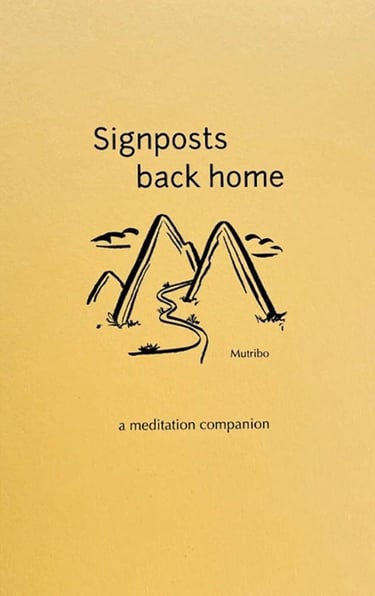
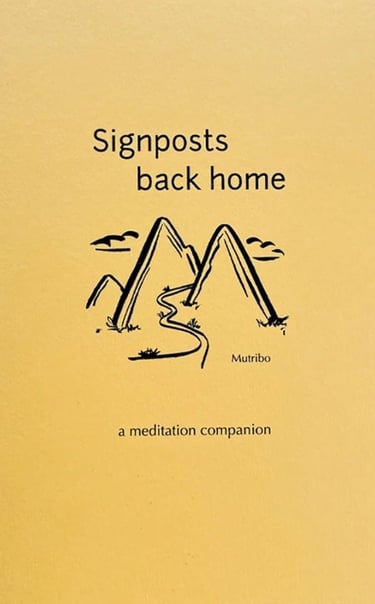
Signposts back home: a meditation companion
Mutribo
It is a book produced by The Broad Place called "Signposts back home" and it is by Mutribo, Jacqui's esteemed teacher and meditation mentor.
I love the questioning in most of the poems or poetic essays.
"Where is home?
Can you find it on a map? ....
"Where is your home?"
I would like to close with one of my favourite poetic introspections by Mutribo.
the breath of the unknown
"What is more silent than this silence?
What is it that supports and animates this stillness?
What is it that cradles this silence in its hands?
Meditation is the journey back to before, a path embedded in stillness because Truth is very, very quiet.
That path back, that return, leads to just one space and that is now, exactly where you find yourself always.
We love stories. We use narratives about ourselves to help define what is constantly on the move. Every narrative starts as an opening, a conceptual understanding, and ends as a prison. All our stories are paper trails back to now.
Whenever you notice listening to yourself repeat another narrative about who you are, be suspicious. It can never be true. We are never fixed. We are always in movement.
Meditation, to be silent, to be still, to be with yourself at ease, is the beginning of growing up, of growing vertically. It's the start of allowing all the children's stories to fade and find their proper place and to be for the first time with what can never be known.
The path of meditation is just to become friendly, to become trusting, to fall into a deep let-go with the mystery, with the wonder, with the unknown, with the Unknowable.
Stillness is the breath of the unknown."
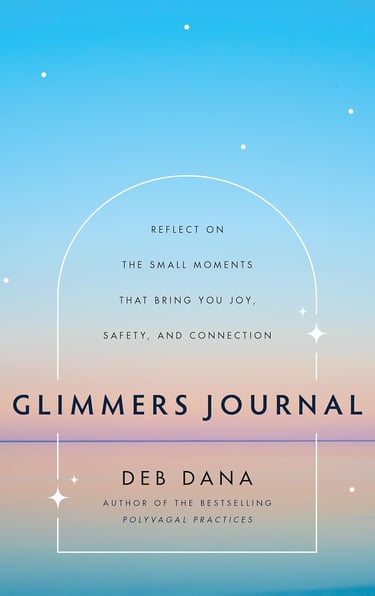
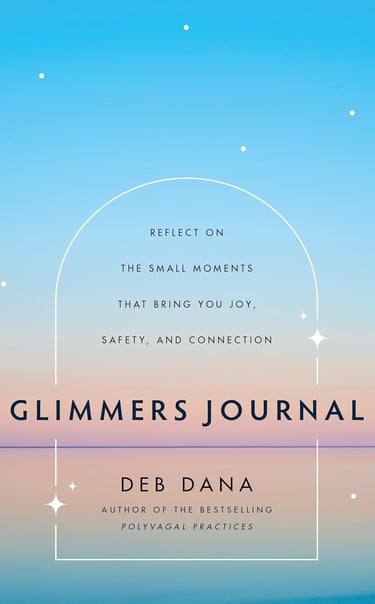
Glimmers Journal: Reflect on the Small Moments That Bring You Joy, Safety, and Connection
Deb Dana
“When we are firmly grounded in our ventral vagal pathway, we feel safe and connected, calm and social. A sense (neuroception) of danger can trigger us out of this state and backward on the evolutionary timeline into the sympathetic branch. Here we are mobilized to respond and take action. Taking action can help us return to the safe and social state. It is when we feel as though we are trapped and can’t escape danger that the dorsal vagal pathway pulls us all the way back to our evolutionary beginnings. In this state, we are immobilized. We shut down to survive. From here, it is a long way back to feeling safe and social and a painful path to follow.”
I love her courses and her books.
The chapter “The science of feeling safe enough to fall in love with life” offers a good mapping on how to observe and track our own experience and use this awareness to come back to safety.
Let us make this our BIG GLIMMER for this summer solstice.
The author is often presented as an interpreter taking up the massive task of translating Polyvagal Theory into a language and application that is both clear and accessible.
“Deb is known for her significant contribution pioneering Rhythm of Regulation® methodology, tools, techniques, and practices which continue to open up the power of Polyvagal Theory for professionals and curious people from diverse backgrounds and all walks of life. Deb can be contacted via her website www.rhythmofregulation.com.”


The Music Shop: A Novel
Rachel Joyce
An important side note on the importance of music: I would like to revisit a favourite, “The Music Shop” by Rachel Joyce.
This is a quirky novel about people who take music to heart and follow a sound ethic and hope to find like-minded people. The music unites and also scares, along with uncovering the feelings when connecting with a human being who might be as real as yourself, and you never thought you would meet.
A few quotes:
“It is hard to look back on a moment when you are haring right through the center of it.”
“They spoke in the flat monotone they used these days in order to remain on open road where nothing would jump out and surprise them. One wrong word and it was like trees coming down.”
“Because Beethoven knows, you see. He knows that you don't find peace until you've been to hell and back. So what's he saying? Is he saying, Don't believe the hype, life is shit? Or is he actually saying, Yes, it's shit, but it fits inside a sonata? It's up to you. But you will never find out unless you listen.”
“Jazz was about the spaces between notes. It was about what happened when you listened to the thing inside you. The gaps and the cracks. Because that was where life really happened: when you were brave enough to free-fall.”
“As he listened, it was like doors opening, one after another. The notes started running when he thought they would go slow. They walked off to the side when he was sure they should go straight ahead.
They grew fins and swam just as he had got used to them having legs. It was like knowing something and not knowing it at all. "This is the record that will change history," said Peg.”
“vinyl, there were no taboos. And if you told Frank the kind of thing you wanted, or simply how you felt that day, he had the right track in minutes. It was a knack he had. A gift. He knew what people needed even when they didn't know it themselves. "Now, why not give this a try?"* he'd say, shoving back his wild brown hair. "I've got a feeling. I just think it will work _" There was a music shop.”


The Art of Dying Well: A Practical Guide to a Good End of Life
Katy Butler
This “comforting…thoughtful” (The Washington Post) guide to maintaining a high quality of life—from resilient old age to the first inklings of a serious illness to the final breath—by the New York Times bestselling author of Knocking on Heaven’s Door is a “roadmap to the end that combines medical, practical, and spiritual guidance” (The Boston Globe).
“A common sense path to define what a ‘good’ death looks like” (USA TODAY), The Art of Dying Well is about living as well as possible for as long as possible and adapting successfully to change. Packed with extraordinarily helpful insights and inspiring true stories, award-winning journalist Katy Butler shows how to thrive in later life (even when coping with a chronic medical condition), how to get the best from our health system, and how to make your own “good death” more likely. Butler explains how to successfully age in place, why to pick a younger doctor and how to have an honest conversation with them, when not to call 911, and how to make your death a sacred rite of passage rather than a medical event. This handbook of preparations—practical, communal, physical, and spiritual—will help you make the most of your remaining time, be it decades, years, or months.
Based on Butler’s experience caring for aging parents, and hundreds of interviews with people who have successfully navigated our fragmented health system and helped their loved ones have good deaths, The Art of Dying Well also draws on the expertise of national leaders in family medicine, palliative care, geriatrics, oncology, and hospice. This “empowering guide clearly outlines the steps necessary to prepare for a beautiful death without fear” (Shelf Awareness).


Drawing on the Right Side of the Brain: The Definitive, 4th Edition
Betty Edwards
Speaking of talent though, I am taking this opportunity to highlight a wonderful art book: "Drawing on the Right Side of the Brain" by Betty Edwards. It has been recommended by one of my friends many years ago and I thought it is such a great timing to revisit it and go through some of the topics here. The author has a background and is trained in fine arts, drawing and painting, and she has sharted to give art education from high schools to later in universities in the US. I loved how she tells us the story of experimenting in the class of the high school, asking her students to draw a copy of a Picasso drawing upside down. To her surprise, as well as her students' surprise, the drawings were very well done. The answer became a further puzzle for the author that dedicated her life to research, teach and run workshops that use art as an insightful tool and methodology not only for students but for anyone who is trying to find novel ways to find solutions or enhance their vision or shift their perspective on the world. The answer was "Upside down, we did not know what we were drawing". She then came across Roger W. Sperry's research on human brain-hemisphere functions, for which he received a Nobel Prize.
"His stunning finding, that the human brain uses two fundamentally different modes of thinking, one verbal, analytic, and sequential and one visual, perceptual, and simultaneous, seemed to cast light on my questions about drawing. The idea that one is shifting to a different-from-usual way of thinking/seeing." That process, Betty Edwards calls it, is the "R-mode", which represents "an extended shift to an alternate mode of thinking."During this process, the participant focuses on the problem under discussion while also concentrating on the drawing. Insights of the process become later on a point of further discussion and understanding.
This to me, establishes the base of a new discovery and opens wide the "gateway" for everyone to take a drawing class, to take up a drawing colouring book, and experiment on their own. I would now love to experiment with drawing something upside down, as I have always been fond of changing and shifting our perspective.
The book Drawing on the Right Side of the Brain is a labour of decades of research and updates in the edits. I enjoy the third edition of the book, issued twenty years after the original one.
This is not only a course in drawing, but it is also backed-up by empirical studies and research and filled with philosophical treats and quotes. It is inspiring and uplifting in so many ways.
We do not have to be discouraged that we are not" born" or carry the genes of a great artist, we should be encouraged to try and persevere as with any other skill that we learn from scratch.
We can all equally gain access to the "R-mode of the brain" and learn how to stimulate the visual, perceptual mode of the brain. We perhaps are already doing it through our dreams, with our daydreams, through imagining how to decorate a space, through using our imagination to create a mini movie or a book in progress. We can all do this just from the comfort of our sofa. It would become a beautiful challenge to pick the pen now and find a drawing notebook and simply transfer those images into objects.
I would add this quote that explains a lot about our sides of the brain:
"You have two brains: a left and a right. Modern brain scientists know now that your left brain is your verbal and rational brain; it thinks serially and reduces its thoughts to numbers, letters, and words....Your right brain is your non-verbal and intuitive brain; it thinks in patterns, or pictures, composed of "whole things, and does not comprehend reductions, either numbers, letters or words." From the Fabric of Mind, Richard Bergland, 1985.
Betty Edwards comments further that " in order to gain access to the subdominant visual, perceptual R-mode of the brain, it is necessary to present the brain with a job that the verbal, analytic L-mode will turn down." The book is therefore a crash-course in how to make these cognitive shifts while learning the techniques of drawing. The goal then leads "to this possibility of seeing things differently by learning to access R-mode at a conscious level.[...] In this process of learning to draw, one then also learns to control (at least by some degree) the mode by which one's own brain handles information."
"By studying this book, one learns how to see."
The same is true for me with going to an art museum, by sitting for a longer time in front of a painting, by challenging yourself and trying to draw with an ink pen.
Enjoy it and try it yourself too.
NOTE:
Maggie is part of various Affiliate Programs. When you buy items through this website, Maggie will get a small percentage of the sale, which helps support free weekly events. As an Amazon Associate, Maggie earns from eligible purchases.

© 2026 OneKindVoice. All rights reserved.
Keep in touch
Subscribe to our newsletter for updates


